The Digital Garden: A Manifesto for the Small Web
A reflection on the web revival, the beauty of building things for no reason, and why a personal website is the last bastion of the human spirit in an AI-saturated internet.
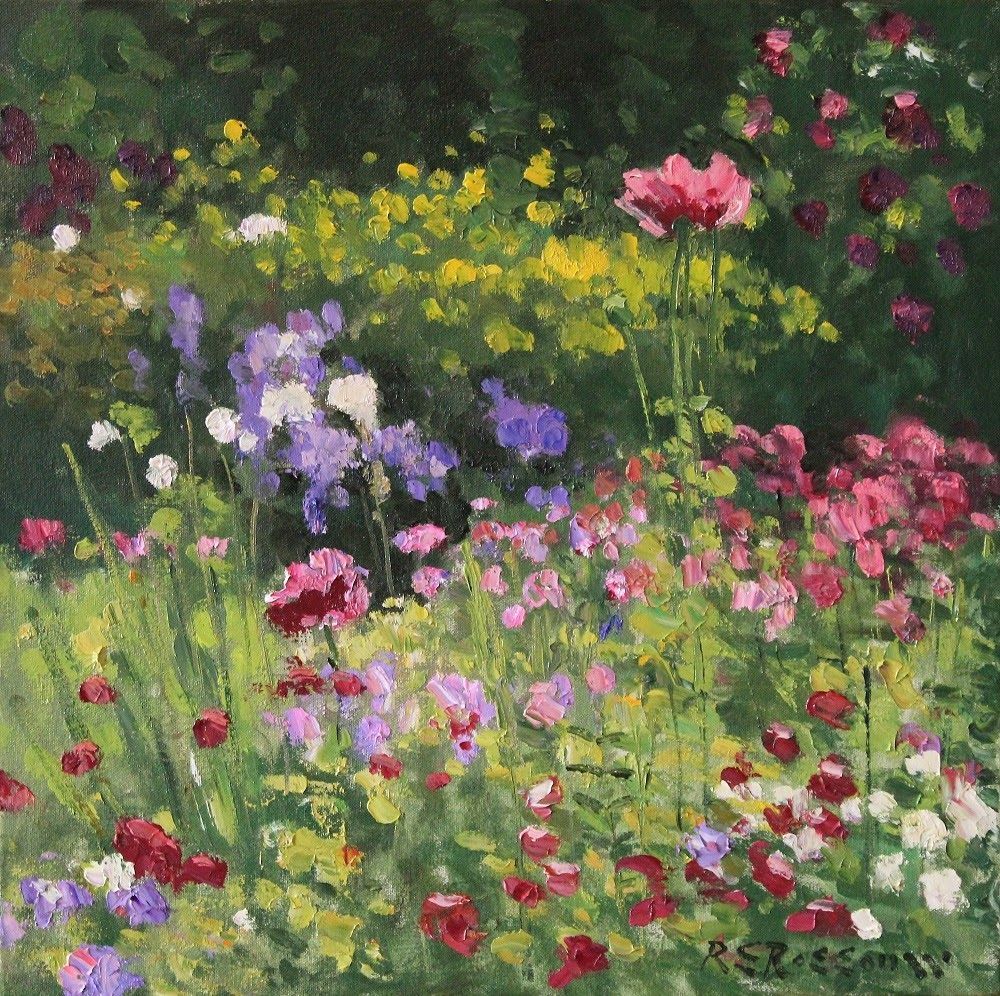
Roelof Stephen Rossouw
It is a strange thing to realize that the internet, which was supposed to be this infinite frontier of human connection, has mostly just become a very crowded, very loud shopping mall.
Every time I open a browser lately, I feel this low-grade anxiety. It is the feeling of being hunted by algorithms that know my weaknesses better than I do. Everything is a product. Even the “content” we consume is just a wrapper for an ad, or a hook for a newsletter, or a desperate plea for a follow. We have spent the last decade moving into these massive, sterile corporate silos where we do not own anything. We do not own our data, we do not own our connections, and we certainly do not own the space we occupy. We are just tenants in a digital apartment complex where the landlord can change the locks whenever they feel like it.
Then there is the noise.
I call it the gray sludge. It is the endless tide of AI-generated articles and SEO-optimized guides that are designed to satisfy a search engine rather than a human being. It is everywhere now. You can feel it when you read it. There is this weird, hollow perfection to it. It has no teeth. It has no edge. It is technically correct and utterly soul-destroying. When I read something written by a machine to please another machine, I feel a little bit of my own curiosity wither away. It is efficient, I guess. It is fast. But it is the efficiency of a factory farm, and I am tired of being the livestock.
There is a theory that has been floating around for a while now called the Dead Internet Theory. It suggests that most of the activity on the web today is not actually human. It is just bots talking to other bots, algorithms feeding data to other algorithms, and a vast, automated circus of engagement metrics that do not represent a single living soul. When you first hear it, it sounds like a conspiracy. But when you spend enough time scrolling through a social media feed where every comment feels like it was generated by a template and every image looks like it was smoothed over by a computer, you start to wonder. You start to feel like you are walking through a ghost town where the lights are still on and the speakers are playing music, but there is nobody home.
The web has become a graveyard of intent.
We have traded the wild, messy, beautiful chaos of the early web for a handful of platforms that want to keep us in a state of perpetual distraction. They want us to be “users,” but what they really mean is “consumers.” They want us to stay within the lines. They want us to use their templates, their buttons, and their fonts. They want us to be predictable so that we are easier to sell. And in the process, we have lost the ability to be weird. We have lost the ability to build things for no reason.
The Web Revival is not about being a luddite. It is not about hating technology or wanting to go back to 1996 just because the GIFs were cooler. It is a quiet, desperate act of rebellion.
It is about reclaiming a corner of the woods and building a cabin with your own two hands. When you build a personal website, when you sit there at 2:00 AM fighting with a CSS grid or trying to figure out why a font won’t load, you are doing something that does not scale. You are doing something that is, by modern standards, a complete waste of time. There is no ROI on a personal blog. There is no “growth hack” for a page about your favorite obscure sci-fi novels or a collection of photos of local moss. And that is exactly why it matters.
Being human is messy. We are inconsistent. We have niche interests that don’t fit into a “personal brand.” We change our minds.
That is where the idea of the Digital Garden comes in. I love the metaphor because a garden is never “finished.” A traditional blog is a stream, a chronological list of things you said once and then forgot about. But a garden is topological. You plant a thought today. You come back six months later and realize you were wrong, so you prune it. You link it to something else you discovered in a book. You watch the ideas tangle together and grow into something you didn’t expect. It is a living record of your own ignorance and your slow, painful progress toward understanding something. It is okay if the garden has weeds. It is okay if some of the paths lead nowhere.
The stream is about the present moment. The garden is about time.
When you live in the stream, you are constantly chasing the new. You are trying to stay relevant. You are trying to catch the wave before it breaks. But in a garden, you are allowed to be slow. You are allowed to let things sit. You are allowed to be obsessed with something for five years and then never mention it again. A garden is a place where you can be yourself.
I want to see the fingerprints.
I want to visit a website and know, within five seconds, that a real person built it. I want to see the weird design choices that an “engagement expert” would hate. I want to read prose that is a little bit too passionate and maybe a little bit too long. I want to see the “Under Construction” banners, not because the person is lazy, but because they are still alive and still thinking. In a world of infinite, perfect, machine-made content, the only thing that has any real value left is the stuff that could only have come from a human brain, with all its beautiful flaws and strange obsessions.
We have been taught to be “users” for so long that we have forgotten how to be creators.
Sharing your ideas on the internet used to be about the ideas themselves. Now it feels like we are all just trying to win a game we never agreed to play. But when you step outside of the silos, when you build your own space on your own terms, the game ends. You don’t have to be “optimized” anymore. You can just be. You can share your progress, your failures, and your random bursts of inspiration without worrying about whether it will “perform” well.
There is a profound freedom in obscurity.
When you know that only ten people are going to read what you wrote, you can be honest in a way that is impossible when you are performing for an audience of millions. You can be vulnerable. You can be weird. You can talk about the things that really matter to you, even if they aren’t trending. This website is my attempt to find that honesty again. It is my attempt to build a place where I can store the things I am passionate about, the things I am learning, and the person I am becoming.
The AI cannot feel the weight of a sentence. It can predict what word should come next based on a trillion other sentences, but it has no idea why that word matters. It has no memories. It has no fears. It has no late-night realizations that make it sit up in bed and reach for a notebook. And because of that, it can never produce anything that truly resonates. It can produce something that looks like resonance, but it is just a reflection of us. It is a mirror, and the mirror is starting to get dusty.
We need the original stuff. We need the raw stuff.
We need the people who are willing to spend their weekends learning how to use a static site generator or writing their own CSS because they want their corner of the internet to look exactly the way they imagined it. We need the people who share their progress on a project that will probably never be finished. We need the people who write about their love for a specific mechanical keyboard or their struggle to understand a physics textbook. This is the stuff that makes the web worth visiting. This is the stuff that reminds us that there are other people out there.
It is emotional for me, in a way that is hard to explain to people who don’t spend their lives looking at screens. Building this site felt like breathing for the first time in years. It is a place where I am not a data point.
When I look at the logs I have written here, I don’t see a “content strategy.” I see a record of my own life. I see the things that kept me up at night and the things that made me excited to get out of bed. I see my mistakes and my small victories. And I realize that by putting these things here, I am making them real. I am taking them out of the ephemeral world of the platforms and putting them into a space that I control.
I think we are all starving for something real. We are starving for the random, the free, and the deeply personal. We want to know that on the other side of the connection, there is someone else who is just as confused and just as fascinated by the world as we are.
The web used to be full of these people. You would fall down a rabbit hole and end up on a site that looked like it was from 1994, dedicated entirely to the history of a specific type of steam engine or a collection of hand-drawn maps of fictional islands. Those sites were beautiful because they were pure. They weren’t trying to sell you anything. They were just one person saying, “Look at this cool thing I found.”
We can have that again. We are having it again.
There is a movement of people who are moving back to the old ways. They are using hand-coded HTML. They are joining webrings. They are hosting their own files. They are rejecting the idea that everything needs to be “social.” They are realizing that if you want to find the human heart of the internet, you have to go looking for it in the places where the algorithms don’t go.
So, don’t build a portfolio to get a job. Don’t build a blog to become an influencer. Don’t worry about whether your site is mobile-optimized or if it has the right keywords for Google.
Build a garden because you have something to say and you want a place to keep it. Build it because the act of creation is the only way to stay human in a world that wants to turn you into a consumer. Build it because you want to see your own progress and you want to remember who you were three years ago. Build it because you want to share your passion with the three other people in the world who care about the same weird thing you do.
Plant a seed. Let it be ugly. Let it be weird. Just make sure it is yours.
The bots are already talking to each other in the dark. The gray sludge is already rising. The mall is already closing. But out here, in the quiet corners, the sun is coming up. The soil is rich. And there is plenty of room for everyone to plant something new.
We are still here. We are still alive. And we are still building.